

From Flock to Fibre: Discovering Canada’s Remarkable Wool Breeds

Photo courtesy of Circle R Livestock
When we invest in a quality wool garment, we often think about its craftsmanship and quality. Rarely do we stop to consider the remarkable sheep behind the fibres. Yet every wool piece begins with a flock.
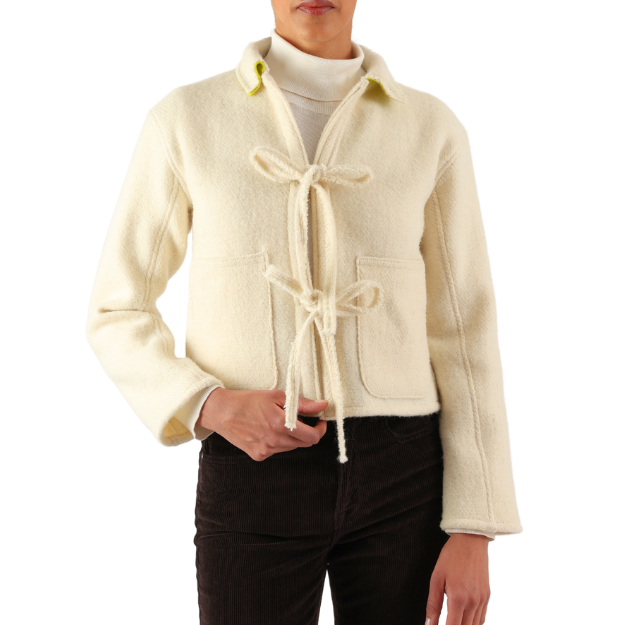
Campaign for Wool has recorded 8,500 sheep farms in Canada caring for more than 800,000 sheep, producing an annual yield of 1.2 million kilograms of wool. There are more than 860 sheep breeds worldwide, with over 50 breeds raised across Canada. Each breed produces wool with its own unique qualities, from exceptional softness to rugged durability. At STE.MARG.SCOT., our Pure Canadian Wool collection celebrates this rich agricultural heritage. Our wool is spun, woven, and sewn entirely in Canada through our partnership with Revolution Wool Co.
Meet the Farmers Behind the Fibre

Photo courtesy of Revolution Wool Co.
Who is Revolution Wool Co.?
Revolution Wool Co. is a family-owned Ontario farm that produces high-quality wool material for local Canadian artisans. As fourth and fifth generation farmers, they raise beautiful flocks of Dorset and Dorset Rideau sheep, whose fleece forms the foundation of the STE.MARG.SCOT. Pure Canadian Wool collection.
Every batch of wool is fully traceable to its initial flock. The fibres are woven and undyed to preserve their natural warmth and durability, and thoughtfully constructed through proven sustainable farming practices that ensure fair pay for farmers, a low-carbon footprint, and a healthy regenerative agricultural future. You can read more about their livestock standards here.
Four Breeds that Shape Canadian Wool
Dorset: The Canadian Classic
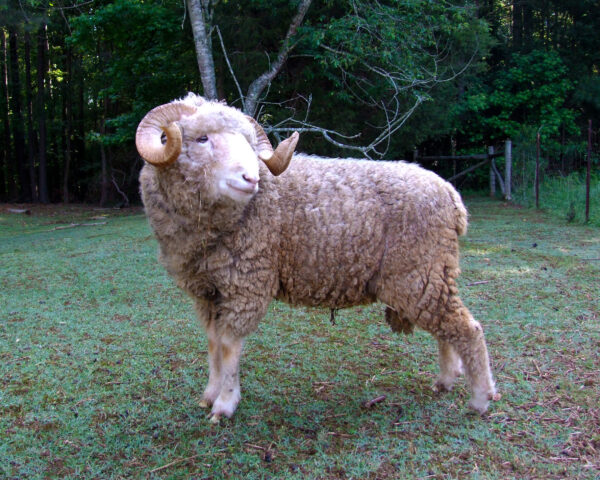
Photo courtesy of Livestock Conservatory
Among Canada’s wool producing sheep, Dorset is one of the most widely raised breeds. Originating in England, Dorset sheep arrived in Canada during the 1840s and quickly became valued for their reliable fleece and hardiness. Long Way Homestead (LWH) reports that Dorset sheep are so popular, they are currently protected by the Conservation Breed list of North America.
Dorset wool is known for:
-
Strong, bouncy, and irregularly crimped white wool
-
Staple length of approx. 3” - 5” inches
-
Fleece yields of 5 - 9 lbs per shearing
-
Excellent warmth, resilience, and durability
Fun Fact!
There are two varieties of Dorset sheep: Horned and Polled (hornless). The original Horned Dorset sheep was developed in the 1500s through crosses with Spanish Merino sheep. The hornless version of the Dorset sheep was developed centuries later in the early 1900s, pioneered by Australia and then in the United States.
Rideau Arcott: Canada’s Agricultural Success Story

Photo courtesy of Longway Homestead
The Rideau Arcott is one of only three sheep breeds developed entirely in Canada. Its story began in Ottawa in 1968, where researchers crossbred Suffolk, Shropshire, Dorset, Finnsheep, and East Friesian to create a highly productive breed with exceptional fertility (LWH). By 1989, the Rideau Arcott became commercially available and quickly gained popularity among Canadian farmers.
Rideau Arcott wool is known for:
-
A lustrous appearance, with shade variations of white, grey, brown, and black
-
A staple length is approx. 2.5” - 4” inches
-
Fleece yields of 5 - 7 lbs per shearing
-
Strong yet airy fibres with excellent durability
Fun Fact!
Thanks to this Canadian agricultural success story, there are currently more Rideau Arcott sheep registered in Canada than any other breed. Arcott is actually an acronym and stands for Agricultural Research Centre of Ottawa (LWH).
Suffolk: The Beauty and the Brains

Photo courtesy of Stonehill Sheep
Developed in England through a cross between Norfolk Horn ewes and Southdown rams, Suffolk sheep are prized for their calm temperament and commercial versatility. Since arriving in Canada in 1888, they have become one of the country's most important breeds for lamb production (Blackies). Their wool is particularly well-suited to blended yarns and hard-wearing fabrics.
Suffolk wool is known for:
-
A strong, open crimp that lends to rougher texture
-
A staple length of approx. 2” - 3.5” inches
-
Fleece yields of 5 - 8 lbs per shearing
-
Excellent durability for sweaters, outerwear, and home goods
Fun Fact!
While Suffolk sheep have white bodies, their face and legs are entirely black, which often lends to a lovely natural heathered appearance from the sheared fleece.
Rambouillet: Canada’s Softest Wool

Photo courtesy of Longway Homestead
Also known as the French Merino, Rambouillet sheep first landed on North American soil in 1840. Since then, farmers were quick to favour the breed for their fast past growth and high-quality wool. Rambouillet wool is similar to the Merino but differs with their disorganized crimp, which lends to greater bounce (LWH).
Rambouillet wool is known for:
-
Soft white with a matte finish
-
A staple length of approx. 2” - 4” inches
-
Annual fleece yields of up to 18 lbs
-
Bouncy disorganized crimp, slightly greasy
Fun Fact!
Rambouillet sheep have a longstanding royal background, serving as the cutest feud object between France and Spain in the 1700s. Heavily guarded in Spain, King Louis XVI stealthily imported a small flock of Merino into France, having heard how wonderful Merino wool was. In his estate in Rambouillet, France, the better, sturdier breed was born. (Crazy for Ewe)
Shetland: Fifty Shades of Wool

Photo courtesy of Longway Homestead
The origins of the Shetland sheep are a bit of a mystery, but we do know they were developed on the Shetland Islands between Scotland and Norway. One of the finer British breeds, Shetland wool is known for its natural depth of colour, hailing 11 different main colours and many variations in markings and patterns. (LWH)
Shetland wool is known for:
-
11 shades ranging from off-white, brown, gray, and black
-
A staple length of approx. 2” - 10” inches
-
Annual fleece yields of 2 - 5 lbs per ewe
-
Light and airy with established crimp
Fun Fact!
Sir Edmund Hillary and his Sherpa guide, Tenzing Norgay, the first to ever summit Mount Everest in 1953, wore Shetland wool jumpers. Only the warmest knitwear could be worn for the coldest exploration. According to North Link Ferries, this tradition was apparently very popular in the 50s, as various Arctic expeditioners layered Shetland knitwear of their own.
Why Canadian Wool Matters
Canadian wool represents far more than exceptional quality. It reflects generations of farming knowledge, local craftsmanship, and a commitment to sustainable production. Every fleece tells a story of the people and flock behind it, connecting us to a slower, more intentional way of making.

Our Pure Canadian Wool collection is proudly sourced entirely from Ontario through our partnership with Revolution Wool Co. From flock to finished garment, every step happens here at home.
To learn more about Canada’s wool standards, explore the Campaign for Wool website, parented by the Canadian Wool Council.
